
10+
Years Of Experience
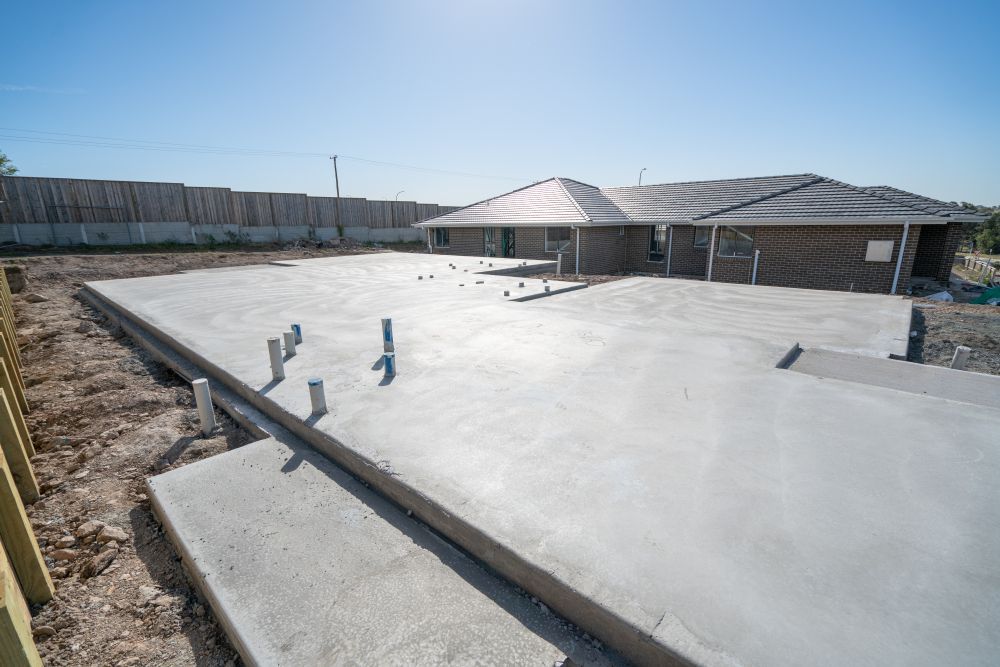
Slabs Poured on Prepared Ground
Concrete Work in Bryan for driveways, foundations, and slabs requiring proper base preparation and finishing
Concrete poured on poorly prepared base material cracks and settles unevenly within a few years, especially in Burleson County clay that shifts with seasonal moisture changes and occasional freeze-thaw cycles. BCS Construction Inc. coordinates site prep and concrete work in Bryan by determining base material requirements, establishing proper slope for drainage, and pouring foundations and slabs that support structural loads without movement. The dirt and site prep background means understanding soil conditions and drainage before any concrete is mixed, which prevents the settlement and cracking issues that emerge when contractors skip base evaluation and compaction steps.
The process starts with site evaluation to assess existing soil type, moisture conditions, and required base depth. Base material is spread and compacted in layers, then graded to establish slope away from structures or toward drainage points. Concrete is mixed to proven specifications for local climate, poured, and finished with appropriate surface treatment for the intended use—smooth trowel finish for interior slabs, broom finish for exterior walkways, or textured finish for driveways.
Schedule a property evaluation to review your foundation or slab requirements and site-specific base conditions.
Why Base Preparation Determines Concrete Performance
Your concrete project moves through base preparation, forming, pouring, and finishing stages. The base phase determines long-term performance because concrete slabs are only as stable as the ground beneath them. In the Bryan area and Mumford Road corridor, clay soil requires specific compaction and moisture control to prevent uneven settlement. The excavation equipment and experience from years of dirt work ensure base material is placed and compacted correctly before forms are set and concrete is ordered.
After the concrete cures, you notice a level slab without cracks, low spots, or edges that have settled lower than the center. Driveways shed water toward the street rather than pooling near the garage. Foundations remain level under framing loads, so walls and doors align properly as construction proceeds. The surface finish matches the intended use—smooth enough for interior flooring installation or textured for traction on exterior walkways.
Foundation work precedes framing and must meet code requirements for thickness, reinforcement, and curing time before vertical loads are applied. Slabs for shops or garages need adequate thickness and reinforcement for equipment and vehicle loads. In-house crews handle both site prep and concrete work, which ensures quality control and eliminates coordination gaps between separate contractors who blame each other when problems arise.
What to Ask Before Concrete Work Starts
Homeowners and property owners in Bryan typically need clarity on base preparation, drainage, and what affects concrete longevity.
What does proper base preparation involve?
The base phase includes excavating to required depth, placing and compacting aggregate material in layers, and establishing slope for drainage. Proper preparation prevents uneven settlement that causes cracks and structural problems.
How does Burleson County clay affect concrete work?
Clay expands when wet and contracts when dry, so base material and compaction prevent the soil movement from transferring to the concrete slab. The base acts as a stable buffer between shifting clay and the rigid concrete above it.
What's the difference between a driveway slab and a foundation?
Driveways need adequate thickness and reinforcement for vehicle loads, with slope toward drainage points. Foundations require specific depth, reinforcement, and curing procedures to support building loads and meet code requirements for residential or commercial construction.
How long does concrete take to cure before it can be used?
Initial curing takes a few days before light foot traffic is safe, but full strength develops over weeks. Driveways should not bear vehicle loads until the concrete has cured adequately, and foundations must cure before framing crews apply vertical loads.
Why do some concrete slabs crack while others stay intact?
Cracks result from inadequate base preparation, improper reinforcement, too much water in the mix, or lack of control joints. Quality concrete work addresses all these factors during the planning and pouring phases.
BCS Construction Inc. pours foundations, driveways, and slabs in Bryan and the Caldwell area with site prep expertise that ensures stable base conditions before concrete work begins. In-house crews provide quality control from excavation through finishing. Arrange a consultation to review your specific concrete project and site preparation needs.